
The Vulnerable Lives of Animals
H is for HawkThe book connects intimate encounters with individual animals to broader human responsibility for extinction, disease, captivity, and ecological change.
increasing Bearing strength in each event
 decreasing
Bearing strength in each eventdecreasingThe Sick Rabbit
A Visible Consequence
An Animal in Distress
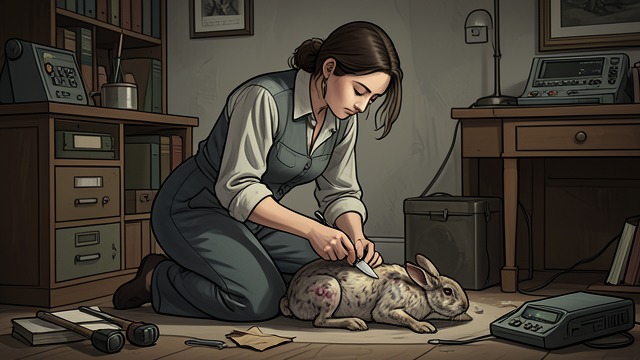
Helen encounters a rabbit whose body has been devastated by myxomatosis. Other people have looked on, unable to decide how to help.
A Difficult Mercy
Helen ends the rabbit’s suffering and later connects the disease to a history of human introductions and ecological upheaval. The individual animal carries a much larger history of intervention.
Compassion requires noticing both the body before her and the forces that made it suffer.
A Landscape After Disease
Ecological Aftermath
A Rapid Collapse
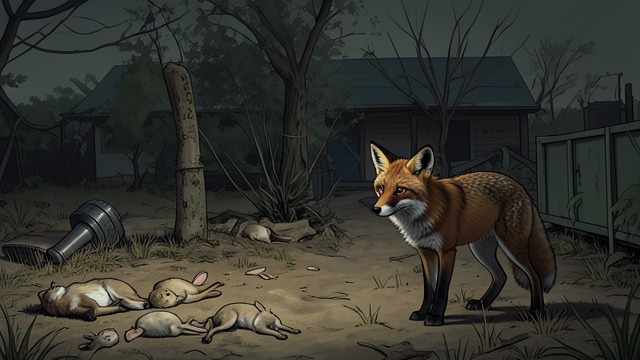
Myxomatosis spreads through British rabbits and kills most of the population within a short period. The loss alters grazing patterns and affects predators as well as the rabbits themselves.
A Changed Normal
Rabbit numbers recover but do not return to what people had treated as normal. The remembered countryside is already a landscape shaped by disease and human action.
Ecological memory is as vulnerable to forgetting as personal memory.
The Released Captive
Wildness and Human Traces
A Nest on Screen
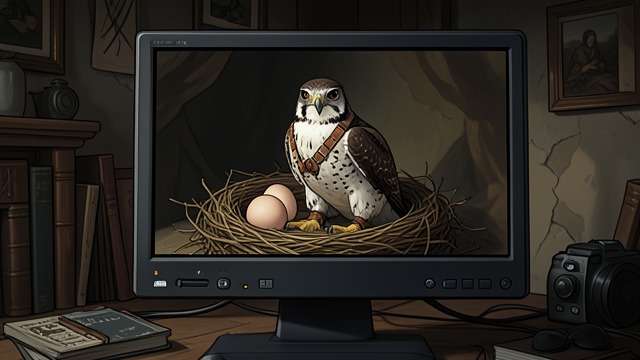
A webcam shows a goshawk pair nesting in English woodland. The female wears leather anklets, revealing that the apparently wild bird has a captive-bred and falconry history.
Complicated Origins
The bird now brooding over eggs is both a descendant of human introduction and a living wild animal. The visible trace does not cancel her independence.
The scene turns reintroduction into a continuing, rather than finished, human story.
A Town and a Wild Hunt
Wildness in the Neighborhood
The Chase Above the Yard
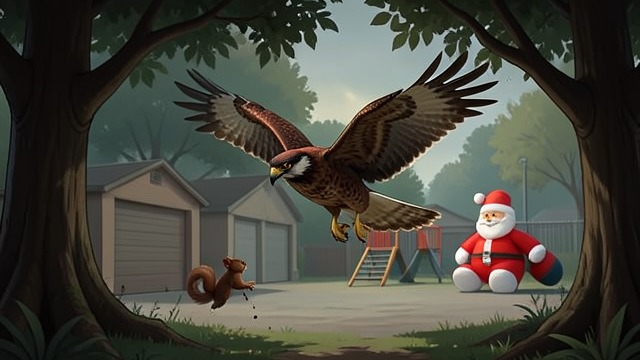
A red-tailed hawk pursues a squirrel through trees behind houses and a children’s playground. The hunt ends beside garages, an inflatable Santa, and the sounds of a birthday celebration.
Rethinking Distance
Helen has assumed that wildness requires escape from community. The hunt shows her a fierce, living natural world embedded in an ordinary town.
The familiar and the wild do not have to occupy separate maps.
A Future Worth Defending
Beyond the Picture
A Missing Abundance
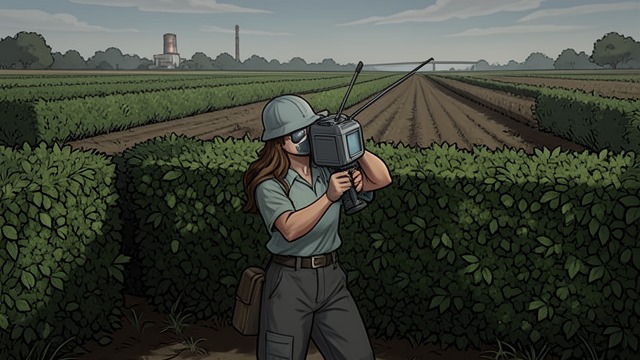
Helen remembers species that once inhabited the fields but are now gone. The surface continuity of hedges and farms conceals the loss of ecological variety.
A Different Defense
She wishes people would protect places for the life they contain, not for a myth of national purity or an idealized past. Such defense requires memory, attention, and action.
The future depends on caring for animals as living beings rather than symbols of what has vanished.
during Helen’s hunting season with Mabel
Britain after myxomatosis arrives in 1952
after Helen sees a goshawk nest camera
Christmas in Maine
near the end, after Helen considers the depleted countryside
